How Health and Wellness Small Businesses Use AI to Improve Client Access
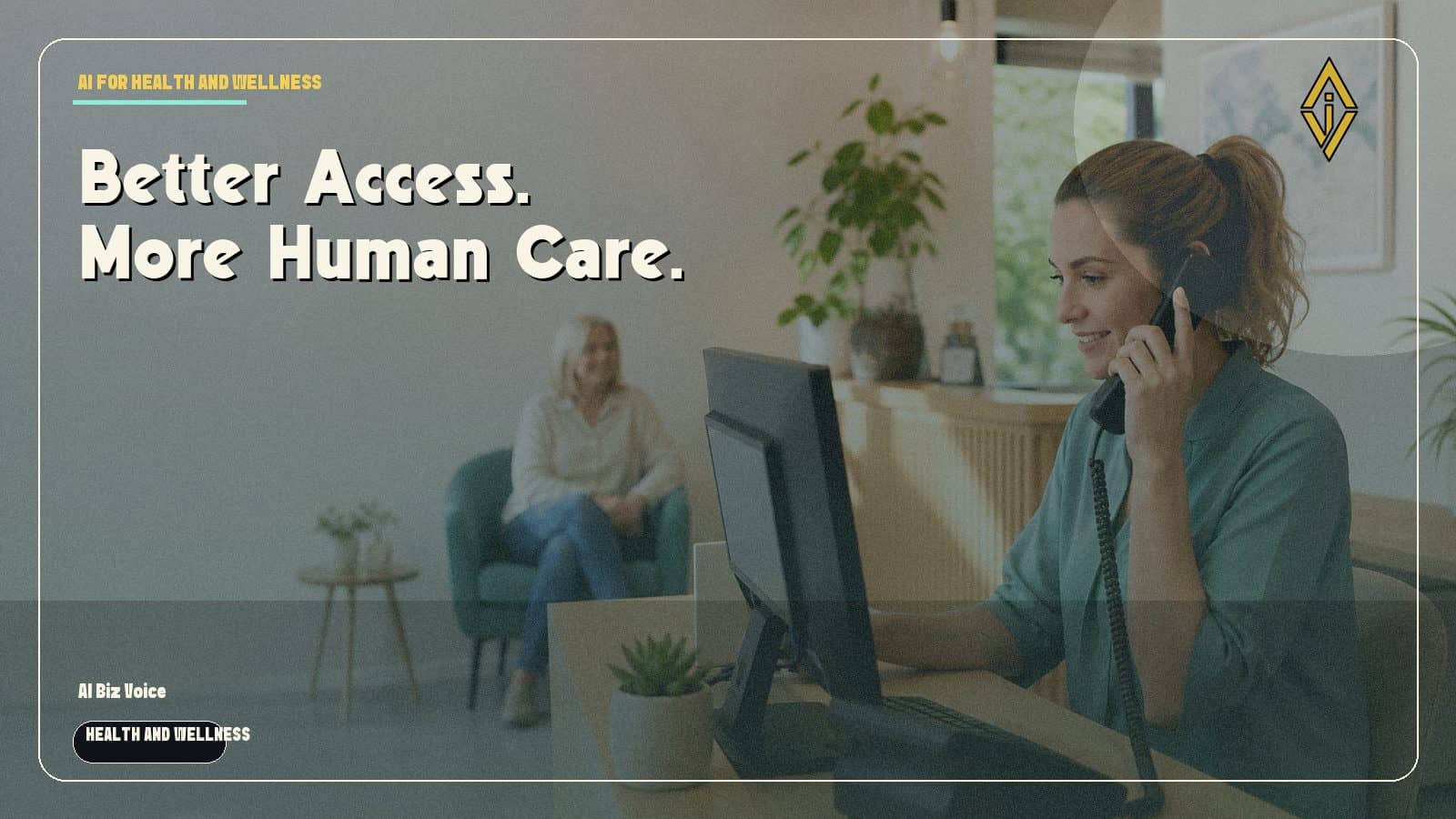
For a wellness studio, med spa, therapy practice, chiropractic office, or other appointment-based small business, the phone line is part of the client experience. A caller may be asking about availability, a service, a location, or how to schedule a consultation. If the team is with clients, every unanswered call can turn into an unnecessary delay.
AI can help with that access problem when it is used for the administrative work around appointments, not for medical or care decisions. The best use case is a clear front-door workflow: answer routine questions, offer approved availability, send a reminder, and involve a person for anything sensitive or outside the business's rules.
Why Client Access Is A Strong Starting Point For AI
AI adoption is growing across service businesses, but adoption is not one-size-fits-all. The Federal Reserve Bank of San Francisco reported that nearly 40% of small-business respondents were already using or planning to use AI, including for customer service. In the United Kingdom, the government's 2026 business survey reported comparatively high AI use among health and social work businesses; that is a UK data point, not a claim about U.S. adoption.
For a small health or wellness business, the practical question is simpler: where does the client journey slow down because the team is busy helping someone else?
Phone coverage, scheduling, reminder messages, and clear escalation paths are often the highest-value starting points because they reduce friction without trying to automate care.
Four Client-Access Workflows That Fit Well
1. Answering Routine Appointment Questions
Clients often call with questions that have approved, repeatable answers:
- business hours and location
- services offered
- appointment types and typical duration
- parking or arrival instructions
- consultation process
- cancellation or rescheduling policy
AI Biz Voice can share information the business has approved and capture the caller's request when a team member is unavailable. The owner stays in control of what the assistant can say.
2. Booking From Approved Calendar Availability
Asking a caller to leave a voicemail adds a handoff and creates room for missed follow-up. When the business allows it, an AI receptionist can check approved calendar availability and help the caller select an appointment window during the phone conversation.
The business should define the constraints: which services may be booked, how much lead time is required, who is eligible for a certain appointment type, and when a team member needs to review the request first.
3. Sending Confirmation And Reminder Texts
Once an appointment is booked, a confirmation message can make the next step clear. An approved reminder text can reduce simple scheduling mistakes and gives the client an easy way to call if plans change.
AI Biz Voice can support reminder and follow-up workflows that match the business's rules and messaging. The goal is not more automated messages. It is timely, useful communication that helps the client arrive prepared.
4. Routing Calls That Need A Person
Some calls deserve immediate human attention. A caller may ask a question that the assistant is not permitted to answer, share a concern that requires staff review, or need to speak to a specific person. The phone workflow should make that handoff clear.
AI Biz Voice can transfer calls according to the rules the business sets. A good implementation makes the boundary explicit instead of pretending automation can solve every conversation.
A Note On Safety, Privacy, And Scope
Health and wellness businesses should be deliberate about what information they collect and what they allow an automated assistant to handle. AI should not diagnose, recommend treatment, interpret symptoms, make clinical decisions, or replace a licensed professional.
Before launch, set a narrow workflow:
- use only business-approved information
- collect only the details necessary for the appointment or callback
- define an escalation path for sensitive, urgent, or clinical questions
- confirm the workflow meets the business's privacy and compliance responsibilities
- review real calls and update the rules when needed
This protects clients and gives the team confidence that AI is supporting access rather than operating outside its role.
How A Small Practice Can Start
Begin with an overflow or after-hours line. Train the assistant on hours, location, appointment types, and the approved booking process. Then let it answer routine calls, capture callback requests, and transfer calls that meet the escalation rules.
Review the first calls with the team. Which questions were answered well? Which requests should route differently? Where does a client need more clarity? That feedback is how an AI phone workflow becomes part of a thoughtful client experience.
How AI Biz Voice Fits
AI Biz Voice helps appointment-based small businesses create a more responsive phone front door. It can answer business-approved questions, collect caller details, check calendar information, book events within the rules the owner sets, send reminder texts, and transfer callers to people when the conversation needs human attention.
For an additional look at consultation-focused workflows, read how med spas use AI receptionists to book more consultations or see how AI Biz Voice works.
Sources
Tags
Explore AI Biz Voice
How It Works
Review the full answer, booking, reminder, and transfer workflow behind AI Biz Voice.
Features Hub
See the core call-answering, scheduling, transfer, and after-hours workflows that drive AI Biz Voice.
Comparisons Hub
Compare AI Biz Voice with voicemail, IVR, and traditional answering-service workflows.
Pricing
Review plans and test what it costs to stop losing calls and protect more revenue.
Related Posts
AI for Professional Services: How Small Firms Use AI for Client Intake and Growth
Professional service firms can use AI to make client intake, phone response, scheduling, and follow-up more consistent without handing over expert judgment. Learn where an AI receptionist fits and where people should stay involved.
How Small Businesses Can Use AI Without Replacing Their Team
AI can remove repetitive phone and administrative work without removing the people who create trust. Learn how small businesses can use AI to give employees more time for judgment, service, and revenue-producing work.
AI Business Phone System for Small Businesses: What To Look For
An AI business phone system should do more than answer calls. Compare answering, lead capture, scheduling, reminders, routing, and human handoff before choosing a phone workflow for your small business.