Why Home Service Businesses Should Use AI Now: A Practical First-Mover Guide
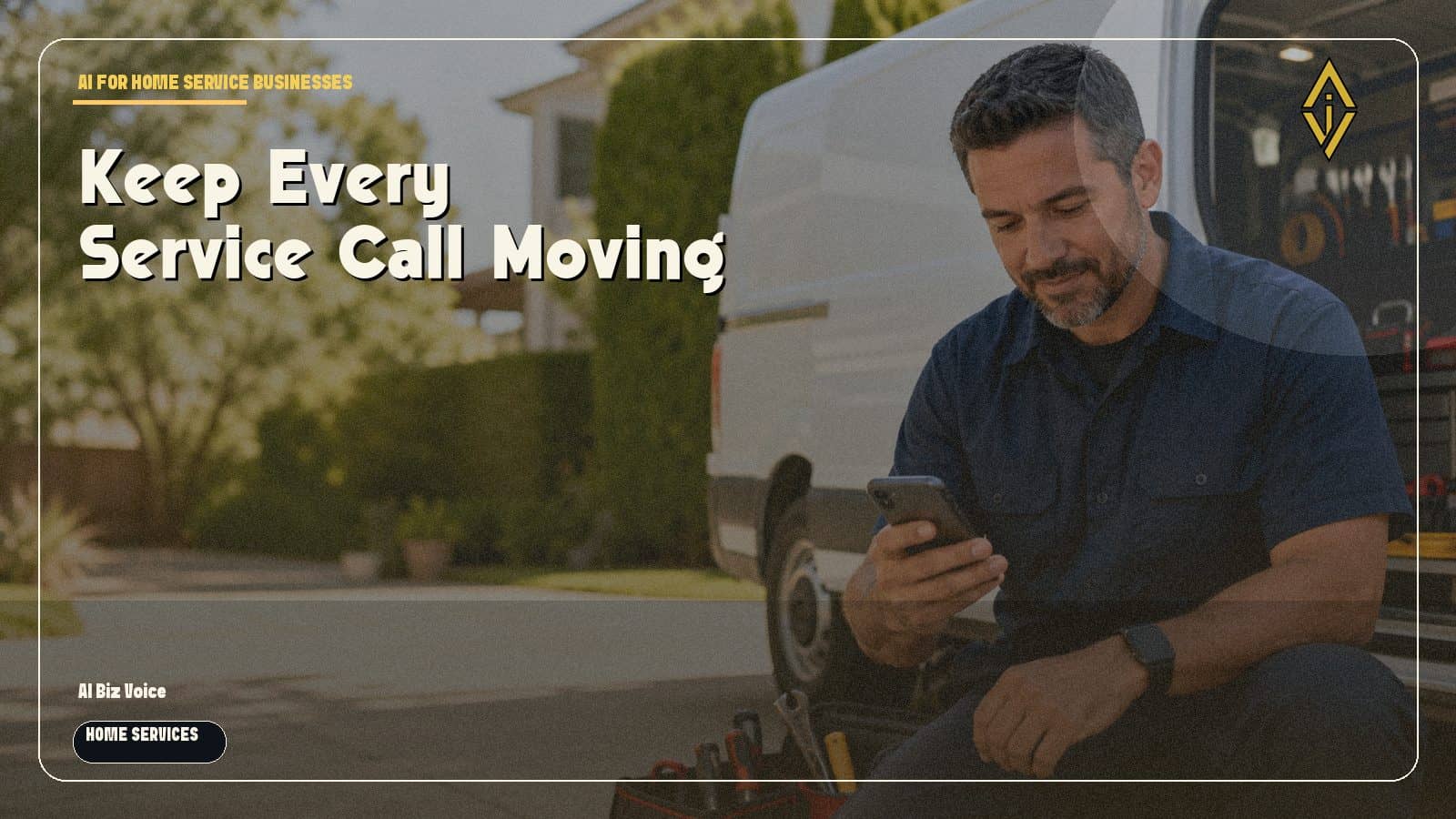
Home service owners rarely miss calls because they do not care about new work. They miss calls because they are already doing it. A technician may be driving, diagnosing a problem, giving an estimate, or working in a place where it is not practical to pick up the phone.
For the customer, though, the moment of need is now. They want to know whether the business serves their area, when someone can come out, and what the next step looks like. An AI receptionist gives the business a way to respond while the field team stays focused on the job in front of them.
Why This Is A First-Mover Opportunity
AI adoption is not evenly distributed across industries. The National AI Centre in Australia reported lower general AI adoption in construction and agriculture than in several service-heavy sectors. That is Australian research, but it highlights a useful point for U.S. home-service owners: broad AI adoption can lag in field-based work even when individual workflows are a strong fit.
The goal is not to become an "AI company." It is to fix a very familiar operations issue: a good lead calls while no one can safely or realistically answer.
Starting with the phone gives a business a practical advantage. It can offer faster response without asking technicians to spend more time at a desk or adding a full-time front desk role before the volume supports one.
Where AI Helps A Home Service Business Most
Answering Calls During The Workday
A caller should not have to guess whether a business is open just because the team is in the field. AI Biz Voice can answer routine calls with the services, hours, service area, and policies the owner provides.
That response is especially valuable during the busiest part of the day, when technicians cannot stop a job to take every inquiry.
Capturing The Right Details Before A Callback
Not all service calls are the same. A well-designed phone workflow can collect the basics before the team calls back:
- caller name and preferred contact method
- job address or service area
- service needed
- a short description of the issue
- preferred service window
- any urgency signals the business wants to review
This means the next person to respond has context. It also reduces the back-and-forth that can slow an estimate or appointment.
Offering Approved Scheduling Options
For work that can be booked by phone, the assistant can use calendar rules the business sets. It may offer approved appointment windows, request an estimate visit, or send the caller a confirmation. The owner decides whether the AI can book directly, request approval, or simply gather the information for dispatch.
AI Biz Voice can connect a phone conversation to calendar-aware booking so the customer moves toward a real next step rather than waiting in a voicemail queue.
Following Up With A Helpful Text
After a customer calls, a confirmation or reminder text can keep the job moving. A text can confirm an estimate window, remind a customer about an appointment, or give a clear callback path. The wording and timing should be controlled by the business.
Escalating Calls That Cannot Wait
Some requests need a person right away. The business can define transfer rules for urgent calls, existing customers, high-value jobs, or anything that falls outside the assistant's approved answers. The value of AI is not that it takes over every conversation. It is that it creates a reliable first response and gets the right calls to the right people faster.
AI Does Not Replace Craft Or Customer Care
No AI phone assistant can perform a repair, inspect a home, or replace the trust built during an in-person service visit. The field team remains the core of the business.
What AI can do is protect the team's attention. When routine phone work is handled consistently, technicians and owners have more time for the hands-on work that customers hired them to do.
That distinction matters. The strongest home-service implementation uses AI as an operations tool: a responsive front door, a lead-capture assistant, and a scheduling layer that follows the business's rules.
A Simple Launch Plan
Choose one call type to start. For example, an owner might route after-hours estimate calls to AI Biz Voice first. Define the service area, the services to mention, the questions to ask, the scheduling policy, and the cases that require a person.
Then review the calls for two weeks. Look for:
- calls answered that would otherwise have gone to voicemail
- complete lead details captured for follow-up
- appointments or estimate requests created
- transfers that should have happened sooner or later
- questions the business wants to add to its approved knowledge
This gives the business a way to improve a real workflow before expanding AI to more calls.
How AI Biz Voice Fits
AI Biz Voice is built for businesses that need to be responsive without leaving the job site. It can answer callers with business-specific information, capture leads, use approved calendar rules to schedule, send reminders, and transfer calls to a person when required.
For industry-specific examples, explore AI receptionists for roofing companies and how landscaping companies use AI receptionists to book more estimates. You can also see how AI Biz Voice works.
Sources
Tags
Explore AI Biz Voice
How It Works
Review the full answer, booking, reminder, and transfer workflow behind AI Biz Voice.
Features Hub
See the core call-answering, scheduling, transfer, and after-hours workflows that drive AI Biz Voice.
Comparisons Hub
Compare AI Biz Voice with voicemail, IVR, and traditional answering-service workflows.
Pricing
Review plans and test what it costs to stop losing calls and protect more revenue.
Related Posts
AI for Professional Services: How Small Firms Use AI for Client Intake and Growth
Professional service firms can use AI to make client intake, phone response, scheduling, and follow-up more consistent without handing over expert judgment. Learn where an AI receptionist fits and where people should stay involved.
How to Use AI for Small Business Customer Service: Start With the Phone
The best way for a small business to use AI for customer service is to start with one repeatable, revenue-connected workflow. Learn why phone answering, lead capture, scheduling, reminders, and human handoff make a practical first step.
How Spanish-Speaking Callers Can Book Jobs with an AI Receptionist
Spanish-speaking callers should not have to wait for a callback just to book a job. Learn how AI Biz Voice helps businesses answer, qualify, schedule, and confirm appointments in the caller's language.